In Her Own Words
- Aug 15, 2025
- 4 min read
I hate the toilet most of all.
Not because it’s dirty—it ain’t, not really—but because it’s right here in the cell with me, plain as day, and there’s no curtain, no wall, nothing. Just me sitting there with the cold porcelain under my thighs, knowing the guard can walk by any second and see me like that.
A woman’s got so little left in a place like this, and they take even the smallest dignity without blinking. I try to hold it, wait until the corridor’s quiet, but sooner or later I have to go. That’s prison for you—every private thing made public.
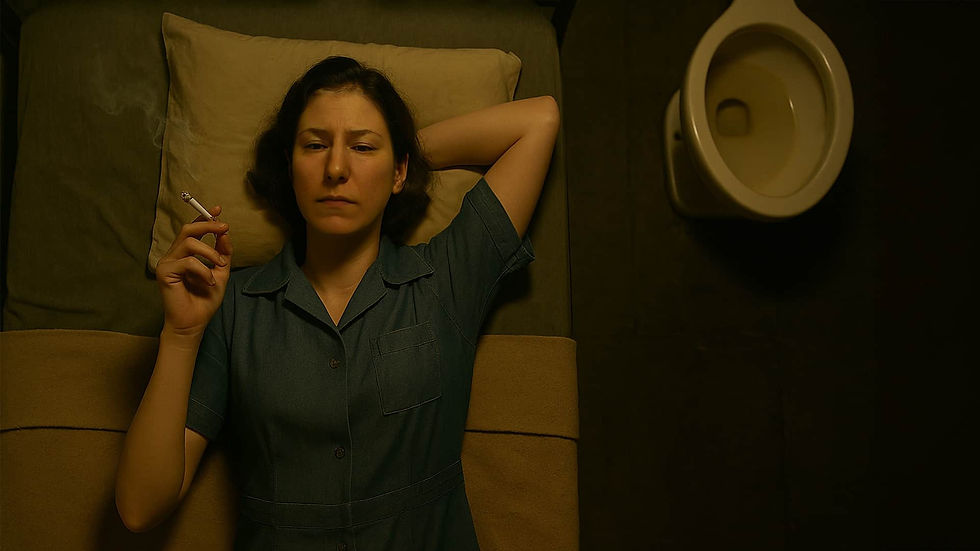
They say a day in here is like a month outside, but that’s a lie. It’s longer. Slower. The air’s thick as syrup, and the hours just sit there on your shoulders until you can hardly breathe.
I’ve been here… I don’t even know how long now. Long enough to know the guards by the sound of their boots. Long enough to know the way the light changes through that little high window. Long enough to start thinking the smell of bleach and dust is normal.
My name’s Gina Sinclair. Folks in the papers call me “cop killer.” They never write the part about Henry, or how it all happened in the split of a second, a blur of shouts and hands and me trying to keep them from killing the only man I ever loved. They said I shot first. Maybe I did. Maybe I didn’t. I just remember Henry’s face, pale as paper, and the officer’s pistol pointed at his chest. I remember my finger pulling the trigger without me telling it to.
Now Henry’s out there somewhere, breathing free air, and I’m in here, counting down to the chair.

Most days, I write to him. Letters he might never see, but it’s something to keep my hands busy. The rest of the time I read the Bible they gave me when I got here. Some days I believe the words; other days they just blur together like the bars on the window. The food’s a cruel joke—sandwiches that taste like damp cardboard, milk that’s always just about to turn. You eat it because you’re hungry, not because it’s food.
But the worst part… the part that never leaves… is thinking about the chair.
Louisiana’s electric chair. They keep it in a little room at the far end of a hallway in the courtroom basement, behind a door they never leave open. I’ve never seen it, not with my own eyes—but I’ve heard enough. Heavy oak, polished to a dull shine, the wood dark from years of sweat and heat.

Big as a throne, but built for nothing but dying. Thick leather straps, worn soft in places, cracked in others, each buckle cold as ice. There’s a broad one for the chest, smaller ones for the arms, ankles, even the forehead. The guards say it’s “secure.” I say it’s a way to keep you from fighting when the current hits.
They use a wet sponge under the head cap, so the current bites deeper. I imagine them soaking it in a metal bucket, wringing it just enough to drip down my neck. I wonder if the water will run cold or warm. I picture the black hood coming down, the inside smelling of sweat and old cloth, the air stale and close. They’ll cinch it tight under my chin so I can’t see the room, just darkness.
The current—they say it’s 2,200 volts to start. I’ve heard the hum of the generator when the men down the hall test it. It’s a low, ugly sound, like a wasp nest under the floor. First jolt locks every muscle, your back arched so hard it’s like you’re trying to climb out of your own skin. Then a pause. Then another blast. Sometimes, they have to do a third.
I think about that more than I think about Heaven or Hell—about the smell of my own hair burning under the hood, the taste of copper flooding my mouth, the way my heart might feel as it stops, starts, then stops again.
The chaplain tells me it’ll be quick. That I won’t even feel the last breath leave me. But I’ve heard the whispers. Some people scream under the hood. Some people breathe smoke before they die.
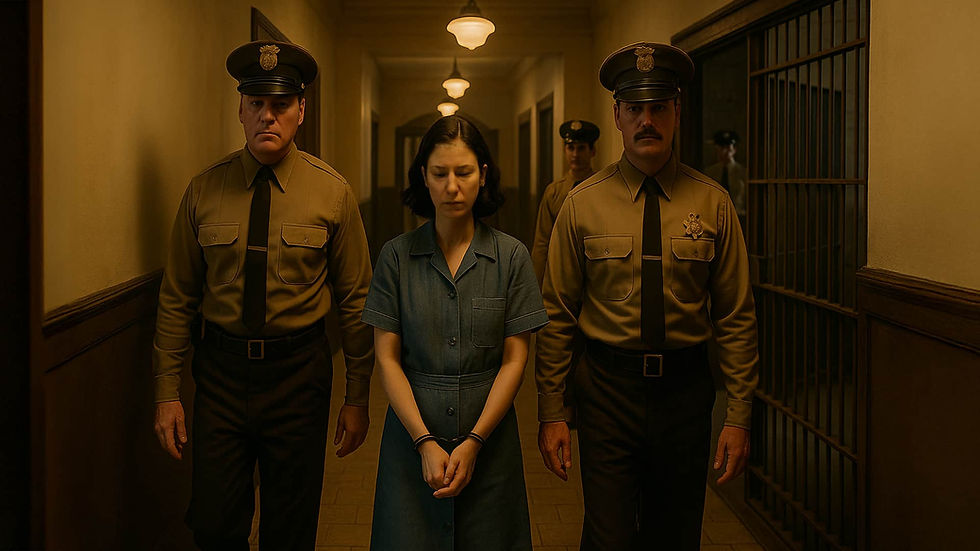
At night, I lie in my cot and see the whole thing. The walk down the hallway, my bare legs brushing the hem of the prison dress, the leather straps tightening one by one, the chaplain’s hand on my shoulder. I see myself breathing in the last stale air before the hood drops, praying Henry’s name in the dark—then a blinding, roaring white.
And when it comes, I’ll try to keep my chin up. But in my heart, I’ll be bracing for the sound of that switch being thrown, for the lightning to run through my bones until I’m nothing but a shadow burned into the wood.
It was love that put me here. Pure and simple. Not greed, not spite, not the blackness they try to paint on me in the papers. Just love. Henry was my whole world, and in that split second, when it was him or the man with the badge, I chose. I didn’t think about laws or trials or prison walls. I thought about how I couldn’t watch the light leave his eyes.
And so here I am, waiting for the straps, the hood, the current. This is the price I have to pay for love. It’s a high one, higher than I ever imagined. But if I could go back, standing there with the gun in my hand and Henry’s life hanging by a thread… I know I’d do it again.
Because some things in this world are worth dying for. And love—real love—is one of them.