
The Case of Shania Harris Part 3
Updated: Sep 7
Appeals, Death Watch, and the Final Judgment
For years after her conviction, Shanaia Harris lived under a sentence that existed simultaneously as a legal reality and a distant possibility.
She had been sentenced to death. The judgment was clear. But a death sentence does not ordinarily move directly from the courtroom to the execution chamber.
Between those two points lies an extensive system of judicial review.

For Harris, that process would consume years.
And as those years accumulated, so did her confidence that the sentence pronounced against her might never actually be carried out.
LIFE UNDER A DEATH SENTENCE
Following sentencing, Harris was transferred from county custody into the state correctional system and classified as a condemned prisoner.
Her daily existence became defined by restrictions considerably different from those imposed on the general prison population. Movement was controlled. Visits were regulated.
Contact with other prisoners was limited, and much of her life took place within the confines of a highly secured death-row unit.

But outside her cell, her case remained active.
A conviction and death sentence do not necessarily become final simply because a trial has ended. Capital cases can pass through multiple stages of appellate and post-conviction review, each examining different questions about what happened at trial and whether the resulting sentence can legally stand.
Harris and her attorneys began challenging both.
Their arguments attacked aspects of the prosecution, trial proceedings and punishment imposed against her. Some alleged errors by the trial court. Others questioned whether her constitutional rights had been adequately protected.
Each filing offered the possibility—however remote—that another court could disturb the judgment.

But an appeal is not another trial.
Appellate judges generally do not convene a new jury and decide whether they personally believe a defendant is guilty. Instead, they examine the existing record for legally significant errors.
For Harris, that distinction became increasingly important.
THE APPEALS BEGIN TO FAIL
The first major decisions went against her. Her conviction remained intact.
So did her death sentence. Her attorneys continued pursuing available remedies, shifting into subsequent stages of post-conviction litigation. Claims rejected in one proceeding could sometimes lead to different constitutional arguments in another, particularly when questions involving counsel, evidence or procedure were raised.
But the legal battlefield was becoming progressively narrower. Courts rejected one claim after another.
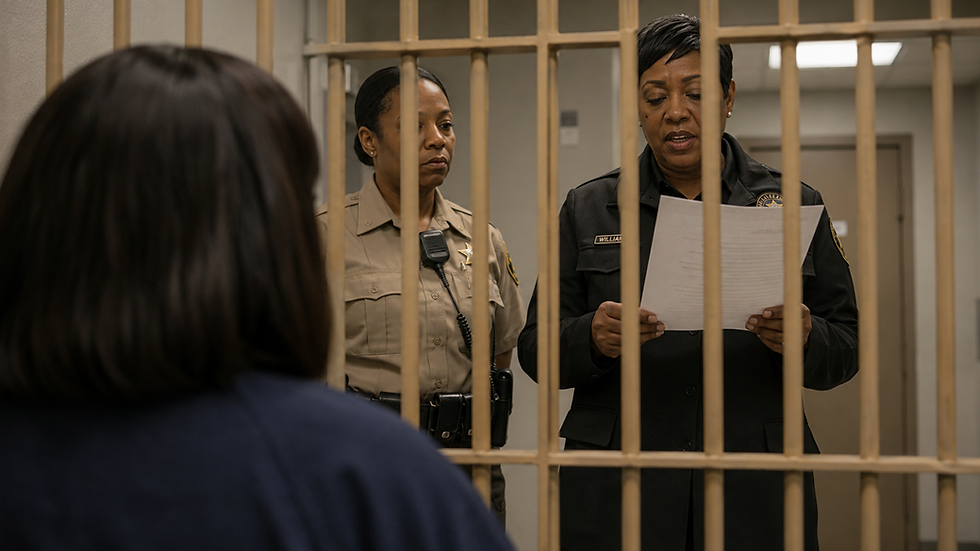
The prosecution argued that Harris had received the process required by law, that the evidence supporting her conviction remained valid and that none of the alleged errors justified overturning her sentence.
Judges increasingly agreed.
Harris, however, reportedly remained convinced that the process would eventually stop the state. Years had passed since she had first heard the death sentence pronounced in court. No execution had occurred. New filings continued appearing. New hearings occasionally followed.
To Harris, the repeated delays became evidence of something larger.
She began speaking as though execution were an abstract threat rather than an approaching event.

According to accounts of her incarceration, Harris could be openly defiant when discussing the possibility.
There would always be another appeal, she believed.
Another court. Another motion. Another reason for the state to wait.
But legally, that assumption contained a fundamental flaw.
Appeals are not unlimited.
RUNNING OUT OF COURTS
As Harris exhausted the ordinary appellate process, her attorneys faced a substantially more difficult task.
Later challenges generally require more than simply repeating arguments that previous courts have already considered and rejected. Procedural rules restrict when claims can be raised again, and courts can refuse to reconsider issues that have already been resolved.

The question surrounding Harris gradually changed.
It was no longer simply:
Could she win an appeal?
It became:
Did she have any viable appeals remaining?
One by one, the available routes closed.
Petitions were denied. Requests for additional review failed. Attempts to delay enforcement of the judgment produced no permanent relief.
Harris could still ask courts to intervene, but asking for intervention and obtaining a stay of execution were two very different things.
Eventually, the legal barriers that had separated Harris from her sentence began disappearing.
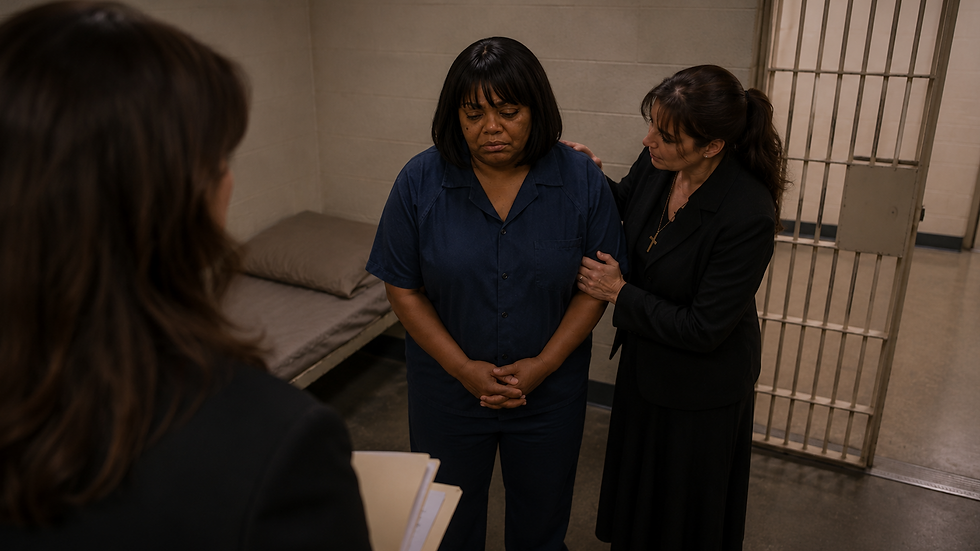
The death penalty was no longer something written on an old judgment buried inside her case file.
The state could act.
THE DEATH WARRANT
That transition fundamentally changed Harris's status.
Once the necessary judicial review had concluded and no court order prevented the sentence from being carried out, authorities could begin the formal process of scheduling her execution.
A date transformed the case.
For years, Harris had been a prisoner sentenced to death.
Now she was a prisoner scheduled to die.
Her attorneys responded with the urgency typical of late-stage capital litigation. Final motions sought stays and challenged the state's ability to proceed. At this stage, however, courts were not starting Harris's case from the beginning.

The burden was increasingly on her attorneys to demonstrate a legally sufficient reason for extraordinary intervention.
They failed to secure permanent relief. The execution remained scheduled.
For Harris, who had reportedly spent years insisting that the state would never actually reach this point, the consequences were immediate.
TRANSFER TO DEATH WATCH
As the execution approached, Harris was removed from the routine she had known on death row and transferred to death watch.
It was both an administrative and symbolic transition.

Death watch exists because a condemned prisoner approaching an execution requires heightened observation, security and coordination. Prison personnel must control access to the prisoner while attorneys, approved visitors, medical staff and correctional officials operate under an increasingly rigid schedule.
Harris was monitored more closely.
Her movements became even more restricted.
Property and personal effects were reviewed under institutional procedures. Visits with attorneys became increasingly consequential as the remaining litigation unfolded against a rapidly shrinking clock.
The courts could still stop the execution.
But unless one of them did, the prison was now preparing to carry it out.
This is the peculiar reality of the final days of a capital case: two systems operate simultaneously.
In one, lawyers continue filing motions asking judges to halt the sentence.

In the other, correctional officials proceed as though the execution will happen exactly as scheduled.
For Harris, the first system was rapidly losing its ability to stop the second.
THE FINAL APPEALS
Her attorneys continued seeking relief.
Emergency filings asked courts to reconsider issues surrounding her sentence and the state's execution procedures. Requests for stays accompanied the litigation, because winning a hearing after an execution would obviously provide no remedy.
The decisions came back against her.
Another denial.
Then another.
The confidence Harris had displayed during the earlier years of her incarceration became increasingly difficult to maintain.
There was no longer another decade separating her from the execution chamber.
There were days.
Then hours.

Unless a court issued a stay or another authority intervened, the judgment entered years earlier would finally be enforced.
No such intervention came.
THE EXECUTION CHAMBER
On the scheduled day, Harris remained under close supervision while officials completed the institution's final procedures.
Her legal team remained attentive to the possibility of a last-minute judicial order. Capital litigation can continue extraordinarily close to an execution, and prison officials must be prepared to stop if a court with appropriate authority issues a stay.
None arrived.
Harris was prepared for transfer to the execution chamber.
The method selected for carrying out her sentence was electrocution.
Unlike the dramatic courtroom proceedings that had originally condemned her, the final implementation of the judgment was controlled almost entirely by written protocol.
Authorized personnel had designated responsibilities. Witness access was restricted.
Communication with officials monitoring the courts remained available until the final stage.
Harris was escorted into the chamber and secured in the electric chair.
The years of litigation were effectively over.
There was no jury left to persuade.
No evidentiary hearing.
No appellate panel awaiting another argument.
The judicial branch had permitted the judgment to stand, and responsibility for carrying it out had passed to the correctional system.
At the designated time, the execution procedure commenced.
Harris was subsequently examined and pronounced dead.
The sentence imposed years earlier had finally been completed.
A SENTENCE THAT ONCE SEEMED DISTANT

The final chapter of Shanaia Harris's case demonstrates why a capital sentence can take years to enforce.
That delay does not necessarily mean the sentence has been abandoned.
It reflects the extraordinary degree of judicial scrutiny that can exist between conviction and execution.
Harris had used the mechanisms available to challenge her conviction and punishment. Her attorneys filed appeals, sought post-conviction relief and attempted to obtain judicial intervention as the execution approached.
For years, those proceedings had one practical effect regardless of whether Harris won the underlying arguments:
They kept the execution in the future.

That may have contributed to Harris's belief that the future would never arrive.
But eventually the courts stopped granting her case additional room to move.
Her conviction remained valid.
Her sentence remained valid.
Her requests for relief were denied.
And once the final barriers fell, the machinery of the correctional system moved considerably faster than the appellate process that had preceded it.
Shanaia Harris had spent years insisting that the state would never execute her.
In the end, the courts—not Harris—decided when there was nothing left to prevent it.


Comments