
The Long Road to Monroe County: The Haunting Case of Judith Coffield
- Jun 27
- 11 min read
The American South in the 1970s was a landscape of simmering tensions and hardened justice. The Civil Rights movement had won legislative victories, but in the rural counties of Alabama, the old ways of power, prejudice, and punishment clung on with a fierce tenacity. It was in this setting that the tragic, complex, and deeply troubling story of Judith Coffield unfolded—a case that would take forty years to even begin to understand, and would leave more questions than answers, even after the ultimate price was paid.

A Fateful Ride
It began on a quiet road in Hudson, North Carolina, in March 1977. Naomi Rolon, a 26-year-old man, was driving across town to visit his father in the hospital. Along the way, he saw two young women hitchhiking. In an act of simple kindness, he pulled over to pick them up. They were Judith Coffield and Ethel Ansley.
What happened next is a blur of violence and terror. The two women, who had been picked up out of goodwill, proceeded to rob and stab Naomi. They confined her to the back of her own car and began a horrific, 40-hour journey across state lines, finally ending in Monroe County, Alabama.
It was there, on March 14th, that Naomi Rolon was killed. Her body and car were found dumped beside a rural road. Eyewitnesses and later testimony placed both women at the scene. The case seemed open-and-shut. A high-speed chase the following day in neighboring Wilcox County led to the capture of Coffield and Ansley, who had stolen a truck to continue their flight. The victim's license plate was found inside the stolen vehicle. The evidence was seemingly damning.

Confession Under the Cattle Prod
The story of the capture, however, is where the narrative of a simple, monstrous crime begins to fracture.
Both women were taken to the Wilcox County jail. Coffield, a Black woman, later claimed that she was subjected to a brutal interrogation. She alleged that law enforcement officers, desperate for a confession, beat her and tortured her with an electric cattle prod. She claimed she confessed to the murder only to make the pain stop.
Crucially, neither woman was read her Miranda rights. They were not told they had a right to remain silent or to have an attorney. They were not allowed to contact their families. They were, in the eyes of the law, isolated and vulnerable.
When they were brought to trial in Monroe County, the charges were devastating: capital murder and aggravated robbery. In Alabama at the time, this combination meant Coffield and Ansley were eligible for the state's mandatory death penalty.

A Trial of Convenience
The trial of Judith Coffield lasted a mere day and a half: August 8th and 9th, 1977. It was a spectacle of injustice.
A Racially Homogeneous Jury: Coffield was convicted by an all-white jury, despite the fact that nearly half of the county's population was Black. This practice, which would later be ruled unconstitutional by the Supreme Court in Batson v. Kentucky, was still standard operating procedure in Monroe County.
Ineffective Counsel: The judge refused to provide funds for Coffield's defense. The court-appointed lawyer spent minimal time with his client, calling no witnesses on her behalf—even though she had people who could have testified to the beating she endured at the jail.
Suppressed Evidence: The physical evidence pointed toward Coffield's innocence. Her fingerprints were only found in the car, not on the murder weapon. She had no blood on her clothes, a stark contrast to Ethel Ansley. Most damningly, forensic analysis determined the killer was left-handed. Judith Coffield was right-handed. This evidence was not made available to the defense until 1999, and the jury never heard it.
The prosecution leaned heavily on the violence of the robbery as an aggravating factor. It didn't matter that Coffield was not indicted for the assault on Naomi; the specter of that violence was used to justify the ultimate punishment. Coffield's parents were not even notified of her whereabouts until the trial was over, and their daughter was already convicted of capital murder.

A Corroborating Voice Silenced
The case against Coffield rested on her confession. But that confession was suspect from the start. It contained incorrect material facts about how Naomi died and the nature of the murder weapon.
A key figure in the saga was Nathaniel Mazdie, the only Black deputy sheriff in Monroe County at the time. He testified that he had witnessed Coffield being beaten to coerce her confession and that he had seen a cattle prod in the jail. He also stated that he saw Coffield falsely sign an affidavit swearing she had been read her rights.
This testimony was a rare moment of official corroboration of Coffield's story. However, in 1999, as Coffield's execution loomed, Mazdie retracted his claims from a nursing home. In an interview with Governor Don Siegelman, he recanted everything, saying he had not seen the beating. Whether this was an act of genuine memory failure, a final act of pressure from the system, or the deathbed confession of a man trying to make peace with his own conscience before the end, we will never know.

The Final Plea
In the weeks leading up to her scheduled execution on June 18, 1999, the world outside Monroe County finally began to pay attention.
Coffield’s legal team filed a clemency petition with the Alabama Board of Pardons and Paroles, highlighting the "Ineffective Assistance of Counsel," judicial bias, and racial discrimination. They also presented new investigative leads, including witness statements implicating other possible perpetrators. But the board was unmoved, denying the request on June 17th.
Anti-death penalty organizations like Amnesty International mounted campaigns. They highlighted Coffield's youth—she was only 21 at the time of the crime—and the stark racial disparities in the justice system. Coffield was a Black woman who had been convicted of murdering a white man by an all-white jury in a county with a history of racial violence. The parallels to a different, darker era of Southern justice were unmistakable.
Coffield's legal team made a last-ditch appeal to Governor Siegelman for executive clemency. Political and religious figures added their voices to the plea, citing doubts about the trial's fairness. But Governor Siegelman rejected the appeal, stating that the case had undergone "extensive review by courts at multiple levels" and that the "strength of the prosecution's evidence" was sufficient.

The Longest Hours: The Final Days of Judith Coffield
The fluorescent lights of the Holman Correctional Facility buzzed with a cold, indifferent hum. For Judith Coffield, the days had long since blurred into a monotonous cycle of concrete walls and measured footsteps. But on June 16, 1999, time seemed to crystallize, each second becoming a heavy, tangible thing. She was forty years old. She had been on death row for twenty-two years. And she had just forty-eight hours left to live.
The Weight of Finality
The notice came without ceremony, as it always did. The Alabama Supreme Court had denied her final appeal. Governor Don Siegelman, despite the pleas of religious leaders and the nagging questions about her trial, had refused clemency. The date was set: June 18, 1999, just after midnight. It was the same day her co-defendant, Ethel Ansley, had been executed three years prior. The symmetry was cruel and complete.
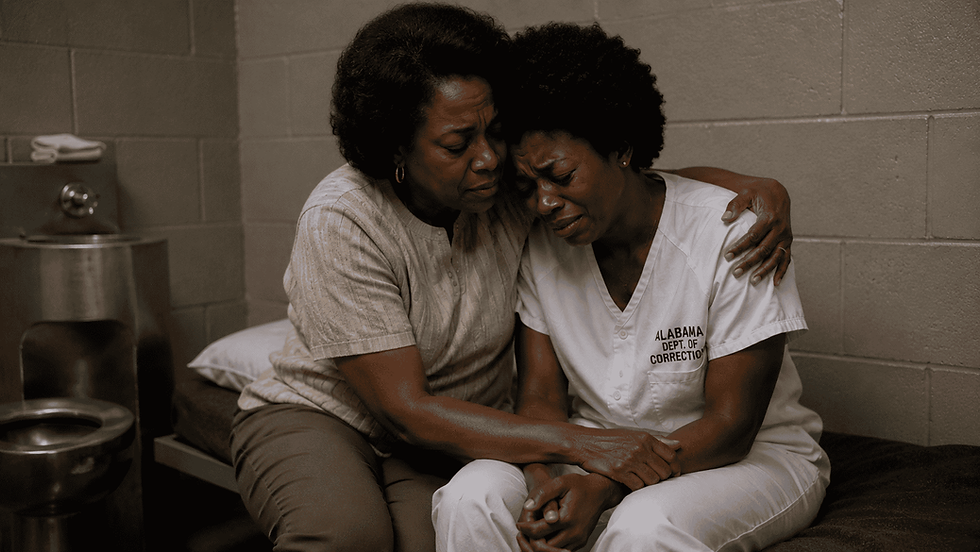
In her cell, Judy—as she was known to those who cared for her—sat on the edge of her bunk. She was a far cry from the 21-year-old who had been plucked from the side of a North Carolina road. The years of incarceration had etched lines of weariness into her face. But what remained was a quiet dignity, a stubborn flame of life that refused to be extinguished by the state's machinery.
"I'm not the same person who made those mistakes," she would later tell her spiritual advisor. "I've had a lifetime to think about what happened. But I didn't kill that boy. I swear it."
The case had always been a patchwork of inconsistencies and injustices. The coerced confession, beaten out of her with a cattle prod in a Wilcox County jail. The all-white jury that had convicted her in a day and a half. The evidence that she was right-handed, while the murderer was left-handed. The blood that was on Ansley's clothes, not hers. None of it had been enough to save her.
She still remembered the words of Nathaniel Mazdie, the Black deputy sheriff who had witnessed her torture, only to recant his testimony from a nursing home just weeks before, as if the state had reached out from the grave to silence him one last time.

The Final Visitor
On the afternoon of June 17, the chaplain came to her cell. He was a kind man, his face soft with a compassion that the prison system had long since abandoned. He brought a small Bible, its pages worn and marked.
"Are you afraid, Judith?" he asked gently.
She looked at him, her eyes dry and clear. "I've been afraid for twenty-two years," she said. "Now... I just want it to be over."
The two of them prayed together. She prayed for her family, who had not even been told of her whereabouts until after her trial had ended all those years ago. She prayed for Naomi Rolon, the young man whose life had been cut short, whose death had set this entire tragedy in motion. And she prayed for the people who would be watching her die, wondering if they would see her humanity in that final moment.
Outside her cell, the prison was preparing. The electric chair—Alabama's chosen instrument of death—was being tested. The executioner, an anonymous figure hidden by a hood, was reviewing the protocol. The media was arriving, setting up their cameras and notebooks, ready to document the 18th execution in the state since 1983.

A Mother's Love
The last visitor was her mother. The prison officials had granted her a brief, monitored visit. When the door opened, Judith's composure finally cracked. She rushed to embrace her mother, the woman who had been denied the chance to be with her daughter during her trial, who had been left in the dark for weeks while a jury decided her fate.
"My baby," her mother whispered, her voice breaking. "My sweet baby girl."
They held each other for a long time, the guards standing awkwardly to the side. There was no anger in Judith's eyes, only a profound, aching love. She had made terrible choices in 1977. She had been a girl, lost and scared, on the run with a woman who would commit murder. But she was not a murderer. And now, the state was going to kill her for it.
"I want you to be strong, Mama," Judith said, wiping the tears from her mother's face. "I'll be at peace. I'll be with God."
"They're doing a terrible thing," her mother sobbed. "They're taking my daughter for no reason."
Judith shook her head. "I've made my peace with it. I've told the truth. Now it's in God's hands."
The guard signaled that the visit was over. The two women embraced one last time, holding on as if they could anchor themselves to each other and stop the world from spinning forward. But the world would not stop. The clock was ticking.

The Longest Night
As the sun set on June 17, Judith was given her last meal. She didn't want anything extravagant. A simple dinner of chicken and vegetables. She barely touched it. She wrote a final letter to her family, a letter filled with love and forgiveness. She forgave the state. She forgave the judge who had refused to fund her defense. She forgave the jury that had convicted her. She even forgave Ethel Ansley, who had named her as an accomplice.
"Don't let hate win," she wrote. "I've seen what hate does. It destroys everyone it touches. I want you to remember me as someone who loved, not as someone who was hated."
In the holding cell adjacent to the death chamber, she sat with the chaplain, reciting the 23rd Psalm. "Yea, though I walk through the valley of the shadow of death, I will fear no evil: for thou art with me; thy rod and thy staff they comfort me."
The words hung in the air, a fragile shield against the approaching darkness. The guards came to prepare her. They shaved her right leg, where the electrode would be attached. She watched them with a detached serenity, as if she were a spectator in her own life.

The Journey to the Chair
At 11:45 PM, the door to the death chamber opened. The room was small and sterile, a white square dominated by the looming presence of the electric chair. It was old, made of oak with high arms, its straps worn and stained. It was called "Yellow Mama" by the guards, a dark joke that did nothing to lessen its menace.
Judith walked into the chamber without assistance. She was wearing a simple white prison jumpsuit. Her hands trembled slightly, but her stride was steady. She looked out at the witnesses, her family, the media. She looked for her mother, finding her in the front row, her face a mask of barely contained anguish.
"I want you all to know," Judith said, her voice clear and strong, "I am innocent. I have always been innocent. I did not kill Naomi Rolon. But I forgive you for what you are about to do."
The guards guided her to the chair. They strapped her in—across the chest, across the arms, across the legs. The leather was cold against her skin. They attached the electrodes: one to her shaved leg, one to her head. The sponge was wet and heavy.

The chaplain stepped forward, anointing her forehead with oil. "The Lord is my shepherd; I shall not want," he prayed.
The executioner, hidden behind a one-way mirror, waited for the signal. The warden asked if she had any final words.
Judith looked up at the ceiling, her eyes glistening. "I'm sorry, Naomi," she whispered. "I'm so sorry you died. I'm sorry for the part I played in the mess that led to that. But I didn't kill you. And I'm ready to go meet my maker."
The Final Countdown
The warden nodded. The curtain was drawn, closing off the witnesses from the final act. But the witnesses could still see through the window. They could still watch.
At exactly midnight, the warden gave the signal. The executioner threw the switch.
A jolt of electricity surged through Judith's body. The theory was that it would sever her consciousness instantly, that the current would scramble her brain and stop her heart. But the human body is a stubborn thing. It fights. It struggles against the unnatural.

Judith's body convulsed against the restraints. Her back arched, her fingers clenched. The witnesses heard a sharp, involuntary gasp escape her lips, a sound that would haunt them for the rest of their lives. The voltage cycled, a low hum that filled the chamber. Her body tensed, then relaxed, then tensed again.
The execution lasted several minutes. The electricity was turned on, then off, then on again. The attending physician listened for a heartbeat, finding none. The body was still.
At 12:12 AM, on June 18, 1999, Judith Coffield was pronounced dead.

The Silence After
The witnesses were escorted out. The media filed their reports. The world moved on. But in that small room, in the aftermath of the violence, there was only silence. The chair sat empty, its straps hanging loose. The smell of ozone and burnt flesh lingered in the air.
Judith Coffield was gone. She had left this world the same way she had entered it: surrounded by questions, and in the hands of a system that had failed her.
Her mother, outside the prison, collapsed into the arms of a supporter. The fight was over. The battle for Judith's life had been lost.
And yet, in the years that followed, the questions would not go away. The evidence of her innocence, the racial injustice of her trial, the brutality of her interrogation—it all came to light in the decades after her death. Amnesty International would continue to campaign against the death penalty, citing her case as a prime example of Alabama's broken justice system.
But for Judith Coffield, it was too late. The state had used its power to end a life that had already been surrounded by so much tragedy. She was executed, not for the crime she committed, but for the crime the state accused her of.
In her final letter, she had written something that still resonates today: "The truth never dies. It may be buried, it may be ignored, but it never dies. One day, everyone will know that I did not kill Naomi. And maybe then, they will understand that the system is not always right."
The truth is out there now. But Judith Coffield is not here to see it.
The state of Alabama executed an innocent woman. And the weight of that injustice will never truly be lifted.


