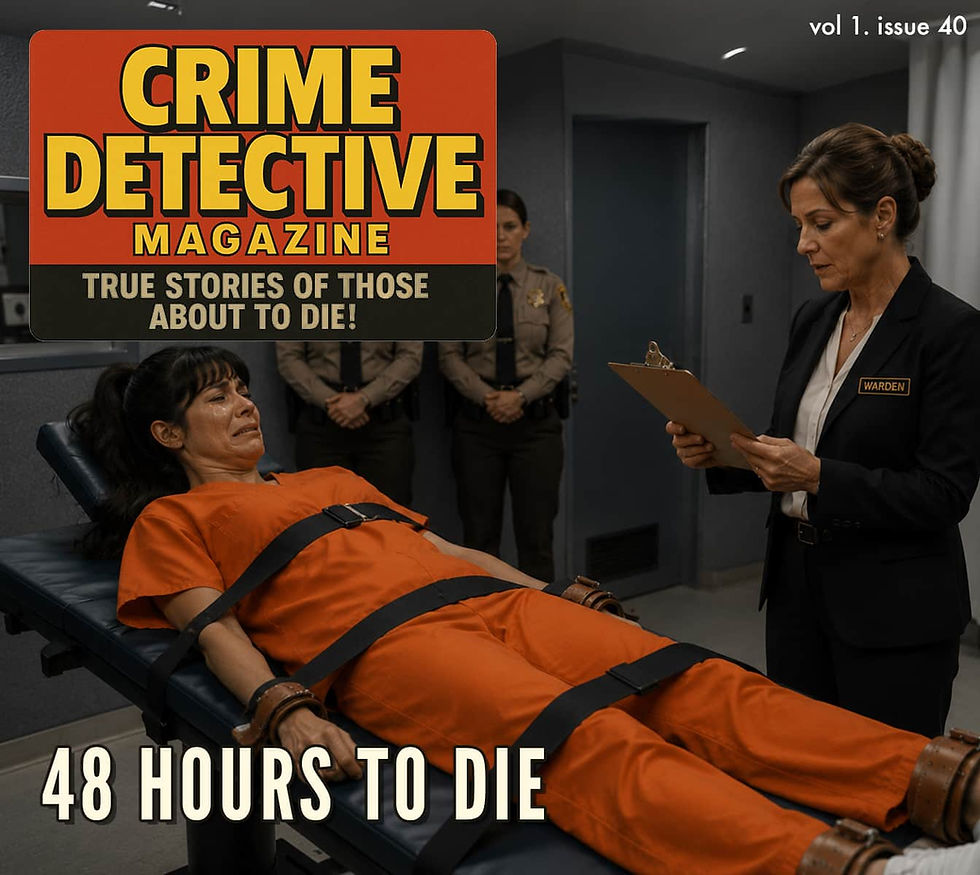
The Chair Waits for No One
- Jul 14, 2025
- 3 min read
They don’t call me “Executioner.” Not around the prison, anyhow. On paper I’m still “Senior Electrical Technician,” a title I held since ’67. I used to fix light panels, wire floodlights, troubleshoot fuse blowouts in the old cellblocks back when the penitentiary ran on guesswork and elbow grease.
But in ’76, the death penalty came back to South Carolina like a ghost that never stopped walking. And with it came new duty. Not an honor, not a curse. Just duty. They looked at me and said, "Robert, you know the wiring better than anyone. We want you to handle this clean."
I said yes. You don't say no to a calling like that—not in Columbia, not when the state comes knocking.
I’ve sat in that chamber 67 times. Forty-four men. Twenty-three women. I remember them all.
The chair sits in a room at Kirkland Correctional, tucked away behind two locked doors and a hall that echoes like a tomb. They bring the condemned in just after six in the evening, sharp. That’s my rule. I don’t like delays. A delay breeds nerves, and nerves make accidents.
Protocol is simple.
They sit ‘em down. Strap ‘em in at the chest, wrists, ankles. I always check the leg electrode myself—goes on the left calf. Leather buckle tight. Saline sponge under copper. If it’s too dry, you get burns. Too wet, it shorts. You learn to feel for “just right.”
Once the statement is done—some pray, some cry, some spit curses—the guards fasten the head strap. I give the nod.
Then comes the last thing they ever see: the ceiling tiles, the hum of the overhead fluorescents… and the leather hood.
I lower the helmet myself. Sponge inside, soaked in brine. Cable snug through the top, twisted down from the control panel behind the wall.
Two jolts. Sixty seconds each. 2,300 volts. A pause between.
We pronounce at 6:11 PM.
Official. Clean. Quick. Most times. But not all.
In 1984, there was Harold Cline. Convicted of killing a store clerk in Aiken County. He was big, angry, twisted in his seat the whole time. I checked the leg strap twice. Still don’t know if it was sweat or bad leather or just plain evil luck—but halfway through the first jolt, the cable snapped clean off his leg.
The current rerouted itself—jumped upward, through the path of least resistance.
His head smoked. The helmet caught fire. We pulled the second switch, thinking it would finish him. But by then, the helmet was melting, and the stench of burnt flesh filled the chamber.
Took us twenty minutes to extinguish it all. I still have the helmet in a lockbox. Charred. Blackened. Reminds me that the Chair is unforgiving when mishandled.
Worse was Patricia Greenglass, 1989. Twenty-seven years old. Pale as a wax doll. She poisoned her three children with antifreeze, said the voices told her they’d be better off in heaven.
We did everything by the book. Leg strap fine. Helmet tight. I pulled the lever.
But something went wrong. Her body convulsed, yes—but she wouldn’t stop breathing.
Three minutes passed. Five. Ten.
The physician checked—still a pulse. She gurgled something behind the gag.
Blood out her nose. I remember one of the guards looked like he was about to cry.
We had to shock her again.
Twenty-three minutes until the final pronouncement. That one still haunts me.
I’ve been asked if I sleep at night. Truth is, I do. Mostly.
You don’t take this job if your hands tremble, or your faith is soft. I believe in the Chair.
I believe in order. I believe in giving the devil his due.
Some folks don’t want to see justice up close. I do. I see it every time I lower that helmet.
This job ain’t glory. Ain’t vengeance. Ain’t cruelty either.
It’s a switch. A light goes out.
And I’m the one who flips it.